
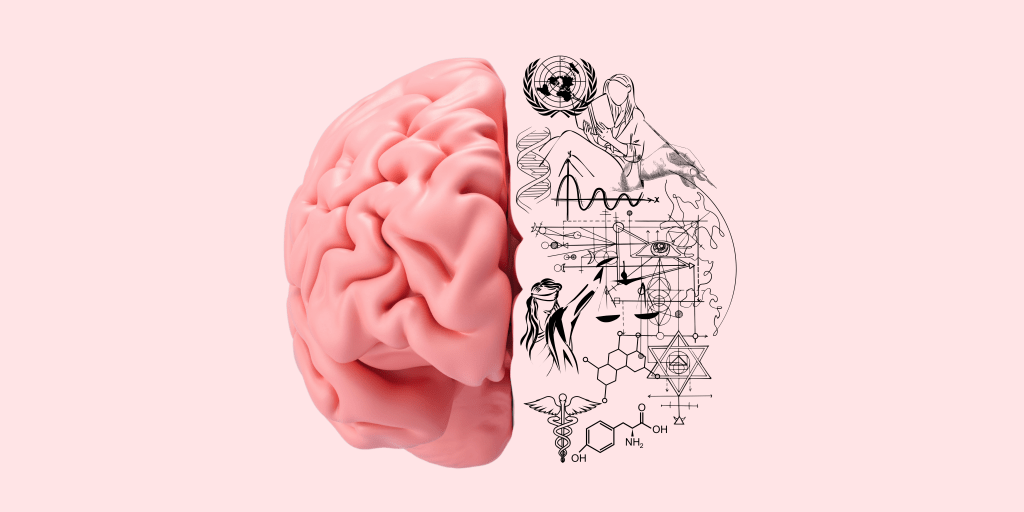

ho•lis•tic
Adjective
Characterized by the belief that the parts of something are interconnected and can be explained only by reference to the whole.
– Oxford Languages
In the recent evolution of education, college admissions, research and greater knowledge, the term “holistic” has emerged as a newfound fundamental value. In revisionist history, we seek more holistic interpretations of once-celebrated figures, from recognizing the imperialist nature of Christopher Columbus to acknowledging the flaws of certain symbols of peace (Martin Luthor King Jr’s end-of-life bend towards justifying violence; Mahatma Gandhi’s inconsistency in his views on race, gender, and the untouchable caste; Abraham Lincoln’s controversial suspensions of the writ of habeas corpus; etc). In college admissions, “holistic” has become both a response to wealth disparities and a contested concept in terms of Affirmative Action.
Less contested is holistic medicine, which is the understanding that healthcare should not just be blood and bones but a thorough encompassing of physical, mental, and spiritual wellbeing. Globally, the medical field has gradually adapted a philosophy of holistic medicine (at least in theory), understanding that a patient’s health is the sum of both their symptoms and root issues.
In applying to college once more (see a glimpse of my college application journey here), I’ve attempted to describe how studying politics and creative writing is actually another method of studying medicine. Sounds crazy? Many of my friends and family tend to think so too, at least initially. What my applications (attempt to) show is holistic pre-medicine: how exploring non-scientific fields enhances the practice of medicine.
Holistic Medicine
To illustrate my interpretation of holistic medicine, let’s picture an adolescent boy struggling with his geometry class. His stress begins to compound, but fearful of how his classmates and teacher may react he hides his difficulties, instead staying up late at night to study. Despite his efforts, his math grade starts to tank and his self-worth slowly depreciates. He develops sleeplessness and anxiety. Months of learned helplessness cripples him into an early stage of depression. His emotions begin to impact his physical wellbeing, manifesting into a consistent cough and bouts of dizziness. His energy levels take a dive, making him increasingly antisocial. Two months later, his mother insists on taking the boy to the family doctor.
A doctor following traditional medicine would see the symptoms of coughing and dizziness and prescribe a mild drug to get the boy through his classes.
A doctor following holistic medicine would take it a step further, realizing that the symptoms are a sign of depression, and would refer him to a therapist and a psychiatrist. Following up, they’d ensure that the patient receives proper mental health treatment. Going even further, the doctor would work with the family to guarantee a strong (and secure) support system.
But my interpretation of holistic medicine continues on. The real root cause would be the reaction the boy had to his failing geometry grades, so the most holistic solution would be to tackle that. One could help show the boy that his grades are not a representation of self-worth, or that getting help is good. A practical solution would be an increase in resources at the school so that all students not only have access to tutoring, but are actively encouraged to do so (thereby eliminating the stigma of getting help). Better yet, a structural change to how grades are received may decrease the stigma of “low grades”.
Of course, this idea of holistic medicine can keep going. The physical well-being of a city dweller, for example, could be increased by making the city more walkable (increased funding to public transportation, for rent bicycles, bike lanes, more sidewalks, etc). But this then extends medicine into economic availability, political feasibility, and public approval. It’s from this extension that my idea of holistic pre-medicine resides.
In the practice of modern medicine, the theories of holistic medicine have gradually seeped through into standard thought; we now understand the importance of mental and spiritual health, and have slowly built services that allow for a more streamlined care process. Still, the exploration of holistic medicine remains limited, and not all practitioners are given the resources to turn theory into fact. Insurance limitations, alongside partisan interpretations of health, have ensured that holistic medicine is really only semi-holistic and is served in varying amounts depending on the hospital, the doctor, and the patient’s socio-economic status.
Holistic Pre-Medicine
In the same manner, there also exists a hole in most modern forms of medicine education: holistic medicine is taught but not actively practiced. The average pre-medicine education consists of biology, chemistry, some physics, and a bunch of mixes between the three (biochemistry, physical chemistry, anatomy, etc). Most students will add on psychology (it’s often found on the MCAT) as well as the minimal amounts of math and english to fulfill remaining requirements. However, few students dedicate legitimate time, particularly outside of classes, to broaden their medicinal studies.
Schools have begun course correction. Johns Hopkins University, for example, requires its students to have nearly as many non medicine credit hours as they do credits in the sciences, with a minimum of two writing-intensive classes. Simultaneously, in past discussions with professors, doctors, and medical schools, a single trend became clear: no one wants a pre-medicine student to focus on medicine. In fact, Professor Ooi (a practicing surgical oncologist in the SingHealth system and a professor at Duke-National University of Singapore Medical School) went as far as to tell me to deliberately avoid medicine during my undergraduate studies. As he expressed, medicine is for medical school; I’d have plenty of time to explore the sciences in the future.
This is, of course, a convenient suggestion considering my interests in other non-medical fields such as politics, ethics, martial arts, and creative writing. But under the pretense of holistic pre-medicine, these activities also tie into healthcare. Martial arts is a conduit for which one can apply and observe the sciences. Punching is an exemplification of Newton’s Second Law (F=MA) and kicking is a great explanation on how the body adapts to its various types of joints. When teaching martial arts, I get to explain muscle soreness, respiratory pathways, and bone-nerve alignments to students. This is surely a trait that will carry into my medical career; I’ve already learned how to describe anatomical concepts to strangers. As a surgeon, I’d have to do just the same thing!
Similar arguments can be made for politics, ethics, and even creative writing. My broader thought in the concept of holistic pre-medicine is that even if an exploration does not contribute to the study of science, it surely still contributes to my communication skills, or my administrative skills, or my relatability. A focal issue that Duke-National University of Singapore Medical School highlights is that memorizing medical concepts really only makes up 1/3 of a practitioner’s actual job. You wouldn’t want a doctor who can perform surgical feats, but goes on temper tantrums with both their nurses and patients.
Active practice of both medicine and non-medicine is what creates holistic doctors. I suggest that it’s better to cultivate this early than later.
Mind and Body
As holistic medicine encompasses, a person’s wellbeing is the grand entanglement between both mind and body. In life-or-death situations, adrenaline carries the body through exorbitant amounts of stress. Documented cases show parents running on sheer mental willpower due to the worry for their children’s safety, only to collapse the second their child is secure. Positive mindsets tend to correlate with lower blood pressures and decreased risk for cardiovascular disease, while negative outlooks do quite the opposite. Anticipation forces the body into a hyper state while boredom leads to feelings of sleepiness.
We are beginning to acknowledge the real implications of the term “mind and body”, but have only just begun the process of understanding it. In this process of building holistic medicine, it’s important to acknowledge just how far health truly stretches beyond what we eat and how many push-ups we can do.
And as our definition of medicine expands, so too should our definition of pre-medicine.
 KS Consulting
Leave a comment