

Free Will
If there is any topic that immediately gets me riled up, it’s discussions over whether or not free will exists. The basic premise goes something like this:
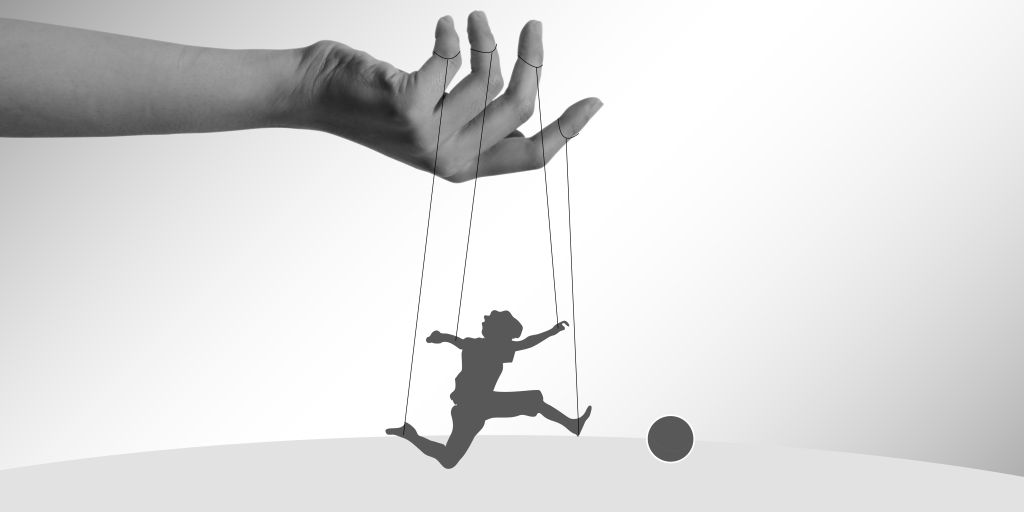
Free will is the “power or capacity of humans to make decisions or perform actions independently of any prior event or state of the universe” (Britannica). If humans do have free will, it supposes that individuals have some level of, if not complete, control over their decision-making. Meanwhile, a lack of free will translates to the presumption that all choices were somewhat predetermined.
Proponents of free will argue that the whole concept of “free will” is more subjective to the individual than anything else, meaning that the belief in free will encourages the existence of free will. In simpler terms, if you feel free to do whatever you want, then you’re technically free to do whatever you want. Simultaneously, certain intrinsic notions of moral authority and guilt seem to arise independent of prior experiences and teaching. We just naturally, and independently, decide that certain things are wrong and right for ourselves.
Opponents of free will instead endorse the idea of determinism: that one event must always lead to another. As such, all choices made are a consequence of other previous choices. Determinism has varying degrees within itself, but the broad suggestion is that there are certainties within decision-making. This is also supported by scientific studies that show that when a decision is being made, brain activity already fires before we ourselves are conscious of a choice. We don’t naturally choose to breathe, or digest, or blink, and so most non-engaging choices are determined.
On a religious front, free will is almost a baseline notion to explain the internal human battle between doing “good” and doing “bad”. This justifies why negative occurrences may still exist (in judeo-christian belief, it’s the influence of the devil) despite the omnipotence of an altruistic, pure good (deities and God). The alternative suggests that human choice isn’t a factor whatsoever, and that all existence is predetermined.
Other portions of science suggests some form of free will, as Heisenberg’s theory of quantum mechanics (read more here) suggests that the universe is more probabilistic than deterministic; we can say that certain events are likely to happen, but never that they will happen (in the same way that Heisenberg’s equation suggests that electrons are only likely to be in a certain area at any given time). This contrasts with previous conceptions that science does have certainty, such as with Newton’s laws of motion.
With an abundance of polarity, the debate over free will has gradually grown to become far less black-and-white and more of a recognition that free will exists within set limits. Human behavior, in accordance with a degree of determinism, is rather predictable. Still this doesn’t mean that decision-making autonomy doesn’t exist (at a minimum, within each person’s subjective self-interpretations). In other words, a person who has worn their hair long for 40 years is more than likely going to keep their hair long, but theoretically has the option at any moment to go bald. Or (in a more dramatic example) I, as a long-time student, can technically choose to drop out of college, move to Egypt, and build sand castles in the Sahara.
Are either of these likely? Not at all. Are they impossible? Not at all.
Capitalizing on Free Will
Under this grey-area definition of free will comes the idea of choice architecture: people may be able to make their own decisions, but we can change how a choice is presented to influence results. A classic example of choice architecture is in political polling. By changing the wording of a question, surveyors can actually significantly influence final results. In a similar circumstance, countries that automatically sign people up as organ donors have significantly higher organ donations (go figure) as opposed to countries who have a default setting of “no”. Both options still leave the decision of organ donation up to the individual (either to opt in or opt out) but the architecture is vastly different, thus leading to vastly different outcomes.
From this understanding, businesses, companies, governments, and organizations are all able to capitalize on our decision-making autonomy. Grocery stores, for example, place specific products at eye level in order to influence your purchasing. Meanwhile, movie theatres often use uneven size pricing in order to make larger (and pricier) options more attractive, a stunt also used by fast food restaurants.
Alternatively, these methods of capitalization do not necessarily need to be used for profit. For example, many pharmaceutical companies give out prescription drugs that are built to be taken in a specific order and daily. In reality, many of the pills are placebo; they have no effect, but are created nonetheless to allow for a daily habit to form, thereby increasing medication adherence. Alternatively, many companies have begun the process of encouraging physical health for their employees. Google provides employees with fitness classes while many Microsoft offices are built with indoor tracks and basketball courts. Even my school in China (Duke Kunshan University) offered select spaces for prayer, meditation, and napping.
Altogether, these deliberate innovations may be described as nudges.
Nudge Nudge
nudge
noun
any aspect of the choice architecture that alters people’s behavior in a predictable way without forbidding any options or significantly changing their economic incentives. To count as a mere nudge, the intervention must be easy and cheap to avoid. Nudges are not mandates.
Nudge: Improving Decisions About Health, Wealth, and Happiness
by Thaler and Sunstein
Nudges are, evidently, everywhere, and are meant to constantly berate the consumer with subconscious hints. For those that don’t believe in free will, nudges are a primary reason as to why it’s believed that people can’t think for themselves; it’s far harder to buy a generic brand of cola when Coca-Cola pushes its “Share a Coke” messaging through restaurants, ads, and billboards. For those who do believe in free will, it’s a constant battle to maintain consistency in your decision-making autonomy.
In my academic studies on nudging (primarily health-promoting nudges) there exists a constant argument as to how far a nudge can ethically extend. A nudge is more ethical when individuals know they are being nudged, understand the impacts of the nudge, and are given resources to properly resist the nudge. In some ways, our modern forms of nudging (advertisements, information [I realize that in academic fields, whether or not information itself is a nudge is heavily disputed], product placements, endorsements, etc) have gone overboard. In some cases, such as with advertisements, we fully understand we’re being nudged, understand its impacts, and are able to resist. After all, you are still fully able to choose a Pepsi over a Coke. However, other nudges play on basic human instinct, impacting resistibility. Think of recent growth in the amount of fake media, deepfakes, scams, and gimmick ads, many of which are becoming increasingly deceiving.
I fear that the complexity of our nudging has expanded beyond the bounds of both ethics and rationality. Coupled with the sheer amount of nudges that we encounter daily, it’s become difficult to differentiate between what is a legitimate decision made from independent thought, and what actions were chosen while subconsciously (or consciously) following a “fad”.
Most importantly, we as consumers must seek, at a minimum, to broaden our understanding of both explicit and implicit nudges. Growing our awareness over common influences of everyday life will only encourage more independent thought. We’ve yet to reach a point where common-life nudges are wholly irresistible (what some ethicists have described as ‘when a nudge becomes a shove’), meaning that for now we still have an opportunity for free will.
In writing this article I’m nudging you to keep your eyes peeled for the influence that others assert on your decision-making. Whether you accept this nudge is up to you. After all, it’s your free will.
 KS Consulting
Leave a comment